FUTURE OF WORK & WORLD ✦ 25 Futuristas ✦ HYDERABAD WEST ✦ AGES 11–22
FoW25-DSB
AGES 11 - 22
Designing
School-Bots
A 6D.VARSITY × INNOZENS ACADEMY PARTNERED PROGRAMME
Future of Work & World = Humans + Humanoids. Learning to design them is intelligence.
Humanoids are entering our societies and workplaces. Not a coding class. Not a kit. School is the first workplace a student ever knows — and the one students understand better than any adult. Twenty-five gifted and talented futuristas (students) a cohort study it as designers, find a problem every school has and nobody has fixed, and build a working School-Bot that fixes it — using 6D.Thinking™ — the human-centred design method built by 6D.Varsity for the Future of Work & World.
✦Weekends · 10:00–12:00
✦Teams of 4–5
✦One prototype every month
October 2026 cohort
First weekend of October · Hyderabad WestCohorts are capped at 25 and led personally by Principal Mentor Mr. Srikanth Talluri. When the 25th seat is confirmed, applications close. They reopen only when a seat among these 25 becomes vacant.
FOW25-DSB ✦ WHAT THIS IS
- A coding class
- A robotics club
- A kit you assemble
- Projects for marks
Human-centred design for the next generation
FoW25-DSB starts from the other end. A school is a workplace: attendance, safety, lost property, queues, notices, labs, libraries, buses. Adults design for it from the outside. You have lived inside it every day for years — you are the expert user no robotics company has. Students study that workplace with a notebook, interview the people who live with its frustrations, then design a robotic or humanoid solution no one has designed before.
By the end of the month it is built, tested with real users, and presented to a room of parents. No month ends without something shipped.
This is how designers are trained for the world that is coming. It is not how children are usually taught. That gap is the whole point.
WHY NOW ✦ THE WORLD YOU GRADUATE INTO
Humanoids are entering our societies and workplaces.
6.5M
HUMANOIDS A YEAR BY 2035
Goldman Sachs raised its forecast nearly five-fold this month.
Annual humanoid shipments now projected at 75,000 in 2026, 890,000 by 2030 and 6.5 million by 2035 — a $138 billion market, up from a $38 billion estimate a year earlier. Warehousing and logistics go first.
$5T
HUMANOID ECONOMY BY 2050
Morgan Stanley sees a billion humanoids in service by 2050.
Roughly 930 million in industry and commerce, 80 million in homes. Unit prices fall from about $200,000 today toward $50,000 — and $15,000 in lower-income countries, which is where India's opportunity sits.
170M
NEW JOBS BY 2030
The World Economic Forum counts 170 million roles created, 92 million displaced.
Nearly 40% of the skills a job needs will change by 2030. The skills rising fastest are not tools — they are analytical thinking, creative thinking, resilience and collaboration. Those are the Six Intelligences, by other names.
Built by 6D
THE METHOD ✦ 6D.THINKING™
Built by 6D.Varsity for the Future of Work & World.
6D.Thinking™ is the working method of 6D.Varsity, our research partner, developed for its FoW2 vision — the Future of Work & World, where Humans + Humanoids work side by side. Six phases, each one an intelligence you exercise every single session. Not a syllabus. A way of seeing.
PHASE 1
SENSORY
Discover · Observe
Walk the school as a workplace. Watch, listen, photograph, ask. Notice what everyone has stopped noticing.
PHASE 2
ANALYTICAL
Define · Frame
Turn forty observations into one sharp problem statement that the team can actually own.
PHASE 3
CREATIVE
Design · Ideate
Sketch twenty answers before choosing one. Wild first, practical later.
PHASE 4
CRITICAL
Derive · Evaluate
Test the idea against real users and real constraints. Keep what survives. Kill what doesn't.
PHASE 5
INTEGRATION
Develop · Prototype
Build the School-Bot — sensors, motors, form, behaviour — as a working prototype, not a poster.
PHASE 6
CONSUMPTION
Deliver · Ship
Present to the people who had the problem. Watch it get used. That is the exam.
ONE MONTH, ONE CHALLENGE
Eight sessions. 720 minutes. One working School-Bot.
Two weekend mornings a week. Each month is a complete design sprint with a real deliverable — so progress is never abstract. You can hold it
8
SESSIONS PER MONTH
720
MINUTES OF HANDS-ON DESIGN
4-5
students per team
12
challenges per year
WEEK 1
Discover & Define
Field study inside a real school environment. Interviews, empathy maps, need-finding. Teams form around the problem they choose.
WEEK 2
Design & Derive
Ideation sprints, concept sketches, a first rough test with users. The weakest ideas die here, on purpose.
WEEK 3
Develop
Build days. Mechanisms, sensing, behaviour. Mentors guide, hands off the tools — the students build it.
WEEK 4
Deliver
Prototype presented live to parents and the people who had the problem. Portfolio entry recorded. Growth Signal shared with you.
Two
COMMITMENT
Two ways in.
Fees are shared on your admissions call, once we know the programme is a fit. We run strictly no demo sessions — one hour cannot show anyone how to design anything, a School-Bot included. The monthly track exists for exactly that reason: a complete design sprint, start to finish, before you commit to the year.
Monthly
Fees on application · the honest alternative to a demo
- 1 Design Challenge — a complete sprint
- 8 Sessions · 720 minutes of design
- One Working Prototype presented to parents
- Enter the cohort when a seat is open — your seat is released at month end unless you continue
PRIORITY PLACEMENT
Yearly
Fees on application · seat reserved for 12 months
- 12 Design Challenges — one every month
- 96 Sessions · 8,640 minutes of design
- 12 Prototypes and an Innovation Portfolio showcase
- Priority Placement — the seat is held for the full year, never released
- Capstone presentation at year end — FoW25-DSB certification from 6D.Varsity
OUTCOMES
What changes, and who notices.
You, The Student - "I found the problem. I built the thing. It worked."
- You learn to interview a stranger and listen for what they didn't say
- You sketch, test, fail and try again without being told
- You ship a prototype every month — and present it standing up
- You stop asking "will this be on the test?" and start asking "who is this for?"
You, The Parent - "Proof you can hold, not a report card."
For parents of school-age applicants — and for families of college-age applicants who apply for themselves.
- A working School-Bot demonstrated to you at the end of every month
- FoW25-DSB certification from 6D.Varsity, independent of INNOZENS.
- A growing Innovation Portfolio — real evidence for college admissions, internships and first interviews
- A monthly Growth Signal across the six intelligences, written by the mentors who watched them work
- A young person who disagrees productively, collaborates, and finishes what they start
who teaches
Mentors who have done this for a living.
The mentoring team is trained in human-centred design and AI design, and has spent careers building complex systems — the Digital Public Infrastructure behind Govtech, Edtech, Fintech and Biotech. They bring that discipline to a room of high-schoolers and undergraduates without dumbing it down.
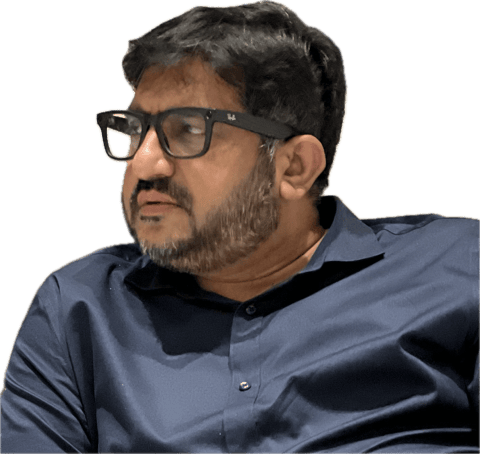
PRINCIPAL MENTOR
Mr. Srikanth Talluri
TRAINING
Stanford Alumni — Human-centred Design and Artificial Intelligence Design
METHODS
Empathy Mapping, Need-Finding, Rapid Prototyping — the working toolkit of professional design studios
DOMAIN
Society 5.0 systems and digital public infrastructure across Govtech, Edtech, Fintech and Biotech
RESEARCH
6D.Thinking™ developed by 6D.Varsity, our research partner, for its Future of Work & World - vision
PRINCIPAL MENTOR
Mr. Srikanth Talluri leads every cohort. Capped at 25 students so he can.
CULTURE
Curiosity, empathy and grit are the curriculum. Everything else is the medium.
NOW BROADCASTING FROM HYDERABAD-WEST
hyderabad west
has it's own channel
Celebrating its Culture.
Connecting its People.
Capturing its Life.
Shaping its Future.
ADMISSIONS · BY APPLICATION
We choose the cohort as carefully as you choose the programme.
Seats are not first-come. Every applicant has a short conversation with a mentor so we can build teams that push each other. Curiosity matters more than prior coding or robotics — most of our best designers arrive with none.
✦AGES 11–22 · IDEAL APPLICANTS: HIGH-SCHOOLERS · PRE-UNIVERSITY · UNIVERSITY & COLLEGE
1
Apply
Two minutes. Parent or applicant (age 11 -22yrs) — tell us who is applying and which track you're considering.
2
Conversation with the applicant
A 20-minute chat with the Principal Mentor — in person, at our Design Studio in Hyderabad West. No online requests will be allowed. We're looking for curiosity — not credentials, not recommendations. No financial arrogance from parents will be entertained. Parents: if you miss the interview, your child will miss a sincere opportunity. Keep in mind there is no second chance in life.
3
Offer & seat confirmation
If it's a fit, you receive an offer with fees and cohort dates. Your seat is held for 72 hours.
Applications close at 25. They reopen only when one of those 25 seats becomes vacant — and the yearly track is the only way to make sure your seat is never the one that opens up.